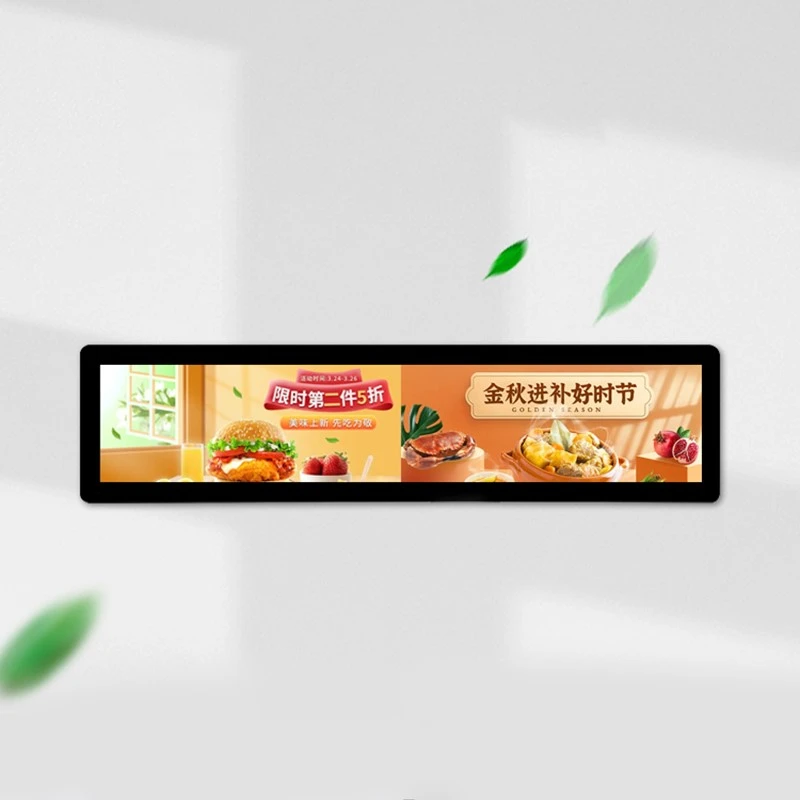

With the continuous advancement of digital display technologies, the demand for personalized visual presentations and space-integrated applications is increasing. Custom-shaped displays are becoming an important direction in the display industry due to their unique structural designs and flexible presentation methods. Compared with traditional rectangular displays, custom-shaped screens overcome fixed shape limitations through specialized structures and modular designs, providing innovative solutions for commercial exhibitions, smart cities, digital advertising, cultural displays, and other application areas.
The most significant structural feature of custom-shaped displays is their flexible form design. Traditional displays usually adopt standard rectangular structures, while custom-shaped screens can be designed into curved, circular, arc-shaped, ring-shaped, strip-shaped, and other special forms according to installation environments and creative requirements. By changing the screen structure, these displays can better adapt to architectural spaces and exhibition environments, creating harmony between the display and its surroundings.
Modular construction is an important part of custom-shaped display structures. Most custom-shaped screens are assembled from multiple display modules, with different sizes and shapes arranged flexibly to create unique visual effects. Modular design improves production flexibility and makes future maintenance, replacement, and upgrades more convenient. When individual display units experience problems, they can be repaired separately, reducing overall maintenance costs.
Highly integrated design is another key structural characteristic. Modern custom-shaped displays usually combine display modules, control systems, power units, data transmission systems, and installation components into a unified structure. By optimizing internal layouts, these systems achieve improved stability while reducing installation space requirements and adapting to different application environments.
Material selection is also an important consideration in custom-shaped display structures. To ensure reliable operation, manufacturers typically use high-strength metal frames, lightweight materials, and durable display components. These materials improve structural strength while enhancing heat dissipation performance and resistance to environmental conditions, allowing the displays to operate effectively in both indoor and outdoor environments.
Flexible design has become an important development direction for custom-shaped displays in recent years. With the advancement of flexible display technologies, some custom-shaped screens can achieve greater bending and shaping capabilities. Flexible structures overcome the limitations of traditional rigid displays and enable applications in complex environments such as curved buildings, artistic installations, and creative exhibition spaces.
In addition, custom-shaped display structures focus on installation adaptability. Depending on specific requirements, these displays can support wall-mounted, suspended, embedded, or combined installation methods, improving space utilization efficiency. Flexible installation structures allow custom-shaped displays to meet various project requirements and expand their application possibilities.
With the continued progress of smart manufacturing, flexible display technologies, and digital control systems, custom-shaped display structures will further develop toward lightweight construction, intelligent functions, and integrated solutions. In the future, custom-shaped displays will provide more creative and efficient smart display solutions for different industries through advanced structural designs and display technologies, driving continuous innovation in the digital presentation field.